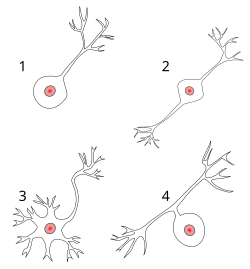
Experiencing unipolar depression, or major depressive disorder, is different from feeling sad and down from time to time. Unipolar depression is characterized by feelings of depression that are persistent, intense, and that make it challenging for you to function normally or relate to others.
Unipolar depression, also known as major depressive disorder, affects millions worldwide. Learn about its symptoms, causes, and treatment options to find relief and support.
A unipolar neuron is a neuron in which only one process, called a neurite, extends from the cell body. The neurite then branches to form dendritic and axonal processes. Most neurons in the central nervous systems of invertebrates, including insects, are unipolar. [2] The cell bodies of invertebrate unipolar neurons are often located around the edges of the neuropil, in the so-called cell-body ...
Unipolar depression is highly prevalent and disabling. In addition, treatment of unipolar major depression is often unsuccessful. A prospective, observational study initially treated 2876 outpatients with full doses of citalopram for up to 14 weeks, and found that remission occurred in only 33 percent [1].
Unipolar neurons, often pseudounipolar in mammals, have the single process splitting near the cell body into axonal and dendritic segments, minimizing the distance for action potentials to travel from peripheral receptors.
any depressive disorder, which is, any mood disorder marked by at least one major depressive episode or an extended time frame of depressive indicators with no past occurrences of manic or hypomanic indicators or combined episodes.
The meaning of UNIPOLAR DEPRESSION is psychological depression not accompanied by mania; specifically : major depressive disorder. How to use unipolar depression in a sentence.
The German National Disease Management Guideline on Unipolar Depression (NDGM), (Nationale Versorgungsleitlinie, NVL), updated in 2022, contains recommendations on the diagnosis and treatment of acute and chronic depressive disorders.
unipolar depression a type that is not accompanied by episodes of mania or hypomania, such as major depressive disorder or dysthymic disorder. The term is sometimes used more specifically as a synonym of major depressive disorder.